The Root of Savagery: Satanic Envy and the Tragedy of Karbala
The Paradox of Denial
In the Quranic discourse, the human soul is often dissected to reveal the hidden illnesses that drive history’s greatest injustices. One of the most profound manifestations of this is found in Surah An-Nisa, where the Divine Verse states: “Do they envy [other] people for the bounty God has granted them? We gave the descendants of Abraham the Scripture and wisdom- and We gave them a great kingdom.” (4:54).
This noble verse was revealed within a specific historical context, addressing the hostile and paradoxical stance of certain factions among the People of the Book toward the Divine Message and the Prophet Muhammad (PBUH). They denied the truth, rejected the light, and went as far as aligning themselves with idol-worshipping polytheists against the Prophet and the believers. The Quran captures this baffling alignment in a preceding verse: “Do you not see how those given a share of the Scripture, [evidently] now believe in idols and evil powers? They say of the disbelievers, ‘They are more rightly guided than the believers.” (4:51).
This raises a fundamental question regarding human psychology: Why did they adopt such a self-destructive stance? They understood, in the deepest recesses of their souls, that monotheists who believed in prior prophets and revelations were inherently closer to them and better guided than the polytheists. Yet, they chose betrayal. The Quranic verdict provides the definitive answer: it was nothing but pure, unadulterated envy (Hasad).
The Archetype of Envy
This destructive paradigm is not new; it is as old as creation itself. The ultimate predecessor in this self-ruin was Iblis (Satan), who blended arrogance with envy to seal his eternal damnation. His audacity manifested in his defiant address to the Almighty regarding Prophet Adam: “And [then] said, ‘You see this being You have honoured above me? If You reprieve me until the Day of Resurrection, I will lead all but a few of his descendants by the nose.” (Al-Isra, 17:62). The sheer insolence in his discourse with God and his outright defiance stem from a single root: the inability to accept that divine bounty was bestowed upon another.
From Cosmic Defiance to Ashura
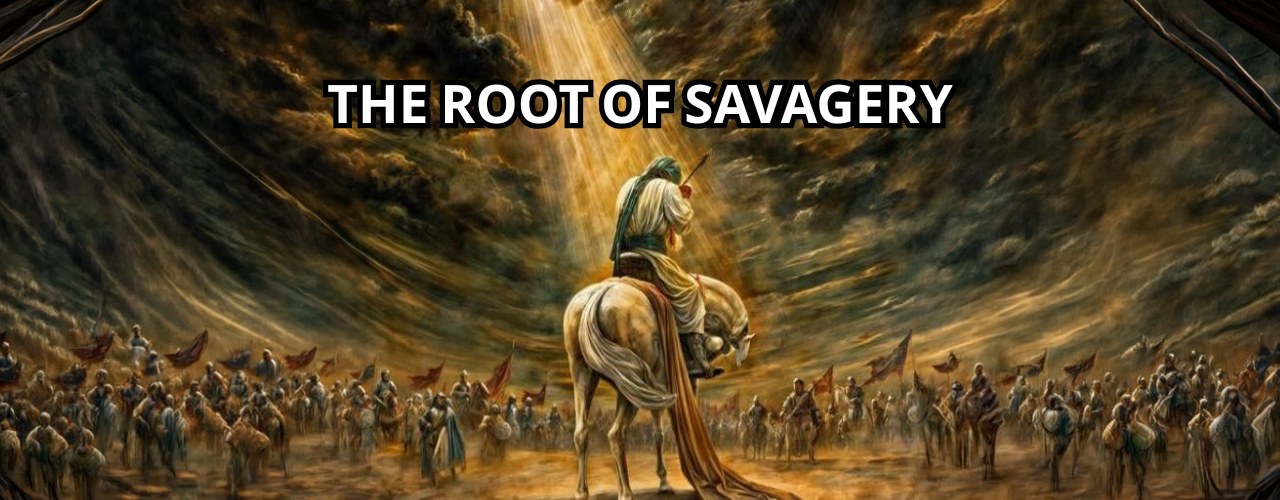
This very same satanic envy bridges the gap between cosmic history and the sands of Karbala. There is no doubt that for the perpetrators who fought Imam Hussain or orchestrated his assassination—such as Yazid ibn Muawiyah, Ubaydullah ibn Ziyad, and Shimr ibn Dhil-Jawshan—a driving force behind their atrocities on the Day of Ashura was this ancient, venomous envy. They recognized the spiritual supremacy, the prophetic lineage, and the divine grace embodied by Hussain, and it was precisely this recognition that fueled their hatred.
This psychological drive provides a profound explanation for the monstrous savagery witnessed on that fateful day. It unmasks the root cause behind crimes that defy basic human nature: the severing of holy heads, the trampling of Hussain’s sacred body under the hooves of horses, and the countless barbaric acts documented in historical accounts. It was not merely a political war; it was an attempt to obliterate the physical manifestation of divine bounty out of sheer spite.
“We Are the Envied”
Ultimately, this historical and spiritual reality stands as a profound realization of the narration attributed to Imam Muhammad al-Baqir (AS) in Al-Kafi. Commenting on the verse, “Do they envy [other] people for the bounty God has granted them?” the Imam declared with absolute clarity: “We are the envied people.” The Ahl al-Bayt (Prophet’s Family) inherited the divine legacy, and in doing so, they inherited the envy of the spiritual descendants of Iblis—a timeless struggle between those who embody divine light and those who seek to extinguish it out of envy.